
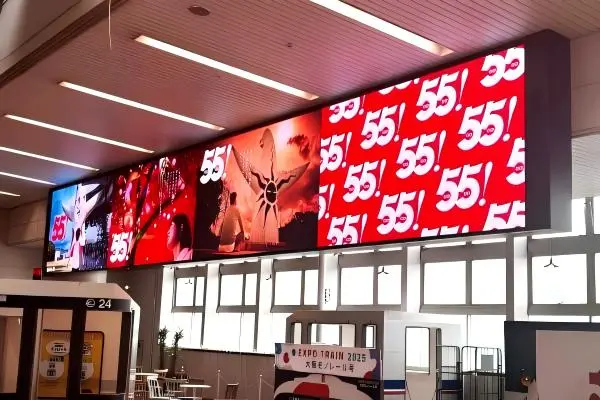
Retail spaces are full of awkward surfaces: square columns, curved pillars, narrow entrances, escalator walls, and corners that shoppers pass without noticing. Those spots are usually bad for posters. They can be excellent for LED.
A flexible retail LED panel helps turn a difficult surface into a digital display area. Instead of mounting a screen beside the architecture, the display can follow it.
Why Retailers Use Flexible LED Displays
The goal is not simply to add more screens. Stores already have plenty of screens. The better goal is to put motion where attention naturally travels.
A wrapped column near a cosmetics counter can show campaign visuals from multiple angles. A corner display at a flagship entrance can pull foot traffic inward. A sculptural LED surface in a showroom can make a product launch feel more like an installation than a shelf reset.
According to the U.S. Department of Energy, LED lighting can use significantly less energy than older incandescent technologies. Display walls are not the same as light bulbs, of course, but the broader shift toward LED-based visual systems explains why retailers now expect digital surfaces to be bright, controllable, and long-running.
Features That Matter in Stores
Retail environments are close-viewing environments. Shoppers may stand only a few feet from the display, so pixel pitch matters. The closer the viewer, the finer the pitch usually needs to be.
Maintenance also matters. A display that looks great on opening day but is difficult to service will become a problem fast. Retail stores need clean access, stable modules, and a plan for replacing parts without shutting down a whole area.
For creative indoor builds, a product such as a creative indoor LED display can make sense when the design calls for L-shapes, pillars, bevels, or mixed-size splicing.
Best-Fit Retail Use Cases
Flexible LED panels are especially useful for:
- Flagship store entrances
- Wrapped columns and pillars
- Luxury product launch zones
- Mall atrium displays
- Pop-up stores and branded corners
- Immersive showroom walls
The common thread is architecture. If the screen needs to adapt to the space rather than sit flat on a wall, flexible or creatively spliced LED becomes more useful.
What to Avoid
The biggest mistake is treating curved LED like a normal video file on a strange wall. Content needs to be designed for the shape. Faces, logos, product shots, and text should land where people can actually see them.
The second mistake is overusing motion. A retail LED column should attract attention, not exhaust it. Slow loops, bold product imagery, and clean color transitions often work better than busy animation.
A third mistake is ignoring sightlines. A display may technically wrap 360 degrees, but most shoppers may see only 120 degrees of it. Content should be planned around real movement through the store.
For retail teams exploring non-flat display surfaces, the BIM Plus-X Series is worth reviewing because its creative splicing features match the kinds of corners and pillar-like forms that appear in commercial interiors.
A good retail LED display should feel like part of the store, not a screen waiting for a wall.