


Europe must show Russia that it is ready to defend itself — Czech MP
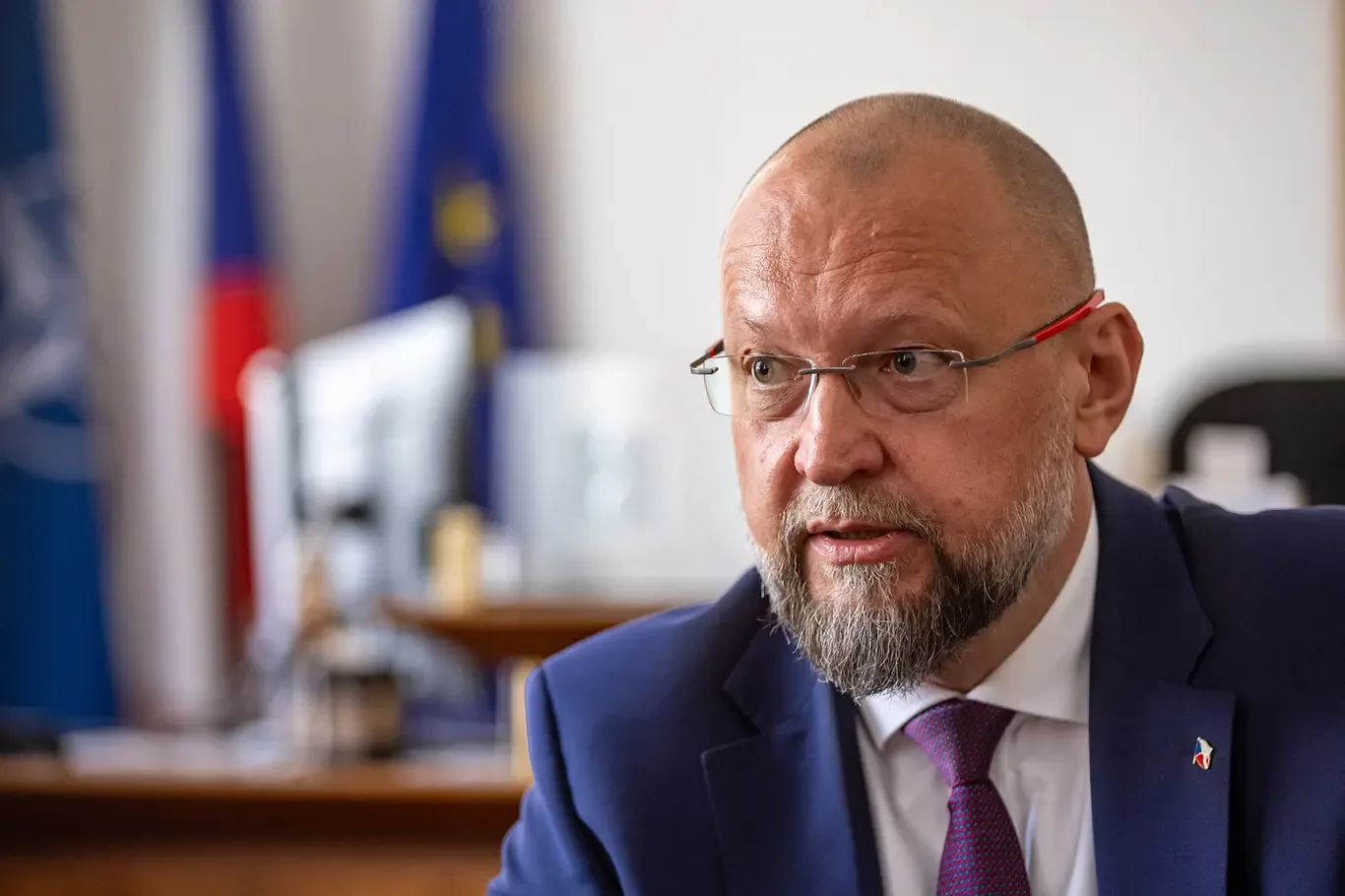
European countries must openly demonstrate to Russia that they are prepared to defend themselves and resist possible aggression. This position is necessary to deter Moscow, since any signs of weakness could encourage the Russian leadership to escalate further. At the same time, the unity of European countries and continued comprehensive support for Ukraine are particularly important, because by helping Ukraine defend itself, Europe is also ensuring its own security.
This was stated in an interview with Guildhall by Jan Bartošek, a member of the Czech Chamber of Deputies.
— We are now seeing an increase in Russian attacks against Europe, including incidents at Leipzig Airport and violations of Polish airspace by military aircraft. In your view, what do these events tell us about the current security situation in Europe?
— I think the central issue today is the position of the US administration. This is not just about Europe; the situation also needs to be viewed in the context of US policy.
First, when Witkoff, a representative of the Trump administration, calls Trump a humanist and says this to Putin—a man who abducted Ukrainian children, destroyed hospitals, buildings and bridges, and killed civilians—it is truly appalling. The second issue is that the US is buying Russian energy. When you buy Russian oil or gas, you help finance the Russian army’s missile production. Those missiles kill people and destroy hospitals. I think this is an extremely alarming development.
There is also the US position on arms supplies to Ukraine. European countries pay for weapons, but they do not reach the Ukrainian army. This sends a very bad signal to all of us. Europe is now facing changes in the security and diplomatic landscape, and the world as a whole is changing too. Under these circumstances, cooperation between Europe, the European Union and Ukraine is becoming even more important. I think we need to draw several important conclusions. First and foremost, Europe must develop its own defense industry.
Of course, we will continue to cooperate with the US, but Russia is preparing for war. That is a reality. If Putin thinks we are weak, diplomacy alone will not stop him. On the contrary, this perception of our weakness will encourage him to become even more aggressive. That is why we must prepare for a potential future conflict, develop our own capabilities and significantly expand the production capacity of our defense industry. This means supporting defense manufacturing and strengthening cooperation with universities and other partners, both in Europe and beyond.
It also means the need for much closer cooperation with Ukraine and learning from the combat experience of Ukrainian service members. You have accumulated tremendous experience. No one else in the world has the same experience as you. So this is not just about increasing production capacity; it is also about sharing knowledge, practical skills and experience gained directly on the battlefield.
This is one way to deter Russia: demonstrate that we have the necessary capabilities, strength and armed forces, and that we are ready to use them. We must also learn from the knowledge your service members can share with us. We must be prepared for the realities of modern warfare and ready to defend ourselves. And we must speak openly about this readiness, because it helps deter a possible Russian attack. The second priority is demonstrating unity. We must cooperate as NATO member states and as members of the United Nations.
Russia is already waging hybrid warfare against our countries, actively trying to turn people against one another and undermine mutual trust. When disagreements arise within countries, it becomes much harder to coordinate joint action. That is precisely why cohesion among European countries is so important. Unfortunately, Slovakia’s Prime Minister Robert Fico is making the situation more difficult. He has said that Slovakia would not fulfill its obligations under Article 5 in the event of a conflict. This is a very dangerous signal. On the one hand, it sends Moscow the message: “I don’t want to fight you.” On the other hand, it sends a signal to NATO itself.
It demonstrates a lack of unity. This could set a dangerous example for other countries that are unwilling to cooperate and encourage them to take a similar position. If there is no unity, why should countries fulfill their Article 5 obligations together? The next issue is defense spending. We are currently in the process of voting on the Czech state budget. Defense spending accounts for only about 2% of GDP. That is not enough. We can see how much Poland and other European countries are allocating.
I believe the approach of the current Czech government is shameful. It is not doing enough to ensure the security of the Czech Republic. We must allocate sufficient resources to our own security and take a firm position on sanctions against Russia. Some European countries are still buying Russian oil and gas. This is very bad for us. We also need unity on this issue. I also believe that we should finally use frozen Russian assets to support Ukraine.
The third priority is strengthening the resilience of Czech society. This is not just about the army and security professionals. It is about building resilience in everyday life so people can help one another. We are not doing enough. We need more exercises and closer cooperation between the army, police and non-governmental organizations to prepare for a possible conflict or an attack on European countries. We are hearing warnings from intelligence services and the governments of other countries that Russia is preparing to attack other states.
If people are not prepared for emergencies, if they come under pressure, face bombardment or are attacked, they simply will not know what to do. People need practical skills: where to go, how to help others and how to act in such circumstances. We do not provide enough training in this area. Many Czechs find it hard even to imagine that central heating, electricity or communications could fail. Imagine being unable to use your mobile phone for several hours. These are exactly the kinds of disruptions people could face during an attack.
However, for many people in European countries, such a situation is almost unimaginable. They are used to thinking that all these services will always be available and will never stop working. I understand this mindset. That is precisely why we need to strengthen societal resilience before a conflict begins. If we wait, it may be too late. And my final point is that we must continue to support Ukraine. It is simple: Ukraine must win, and we must do everything possible to support your country—not just with humanitarian aid, but in every way available to us.
I believe the price Ukraine is paying for peace in Europe—in human lives and money—is too high. But compared with human lives, money means very little. Of course, resources matter, but I have seen footage from the front line and your cities. I have visited Kyiv and Bucha, so I know how terrible the actions of the Russian army were. Ukraine is part of European culture, our shared history and intellectual life. When we help Ukraine defend itself, we are also defending Europe.
Of course, we can discuss proposals for peace talks on Ukraine. But peace can only be discussed with Ukraine at the negotiating table alongside the other countries. There can be no peace in Ukraine without Ukraine. Your voice must be the most important one. You must decide what is possible and acceptable for you, and what you are unwilling to accept. And we must support those decisions. Of course, everyone wants peace, but not peace at any cost. We need an agreement that will ensure peace for decades, not just two or three years—long enough for Russia to prepare for another war and further destruction of Ukraine.
The answer is clear to me. We must support the defense industry, strengthen unity and resilience, and help Ukraine in every way possible. And I must add one more thing: I want Putin and his generals to stand trial in The Hague. That is my sincere wish.
— How should European governments respond when the approaches of the US and Europe toward Russia diverge? What measures should European countries take in such a situation?
— I think European countries are increasingly aware of the threats we face as we support Ukraine.
We have seen suspected acts of sabotage in several countries, including Poland, France, Czechia and Germany. For example, the incident at Leipzig Airport. This is not a game. These are real acts of sabotage. As I recall, around 11 undersea cables have been damaged in the past 15 months. These are real attacks on infrastructure, and I am convinced that Russia is testing European countries in this way. The same applies to drones. When they attack Bulgarian vessels or approach the Romanian border, that is also a test of European countries.
I think we are now seeing greater unity in response to such actions. If we do nothing, the provocations will continue and intensify. If there is no response, Russia may conclude that Europe is weak and that it can go further.
— Do you think European countries should develop a clear strategy for responding to Russian provocations? In other words, if Russia takes certain actions, Europe responds with specific, proportionate measures. How could such a strategy work in practice?
— My personal proposal is to establish no-fly zones extending, for example, 50–80 kilometers into Ukrainian territory along its border with European countries.
This would rule out any debate about which drones or provocations we are willing to tolerate. The answer should be one: none. That way, we would protect our own territory and our countries while also helping to protect part of Ukraine. That is my proposal. We must act more proactively. We must also provide much greater support to the Ukrainian army, including supplying missiles to counter drones. We have these capabilities, especially Germany. So the question is no longer how we could help, but whether we will actually send these weapons to Ukraine.
There is still debate about escalation. Some argue that Russia will see our assistance to Ukraine as an escalation of the conflict. No. Russia will escalate further if we do not help.
For countries such as Czechia and Poland, which have direct experience dealing with the Russian regime and the Russian military, this is not even up for debate.
It is sometimes very difficult to explain this to Western European countries, but I am glad that they are beginning to understand. They must realize that the Russian regime thinks in a completely different way from Europeans. In my view, this regime does not respect human life, human rights, property or democracy. The Russian government operates like a mafia. It supports organized crime, including international crime. It cooperates with the regimes in Iran, North Korea and China, as well as with other undemocratic states whose values are fundamentally different from ours.
We must cooperate with one another because we share common values: respect for human life, democracy and one another. Today, this is no longer just a struggle against Russia. It is a struggle for the future of Europe. And European countries must respond accordingly. We do not want this kind of way of life. If the Russian regime wants to use violence against innocent civilians, it must not be allowed to spread that violence to the rest of the world.
— Earlier, you mentioned that some European countries continue to buy Russian oil and gas. How do you assess this situation, and what specific measures could be taken to encourage these countries to stop importing Russian energy?
— I think that many European Union countries have already stopped using Russian oil and gas.
Hungary and Slovakia, and possibly Spain as well, are still using Russian gas. They need to find alternative suppliers, such as Saudi Arabia, Qatar or other countries. Of course, the war between the US and Iran is not helping to improve the global situation. If it does not end, there is a risk that some governments will once again raise the issue of importing Russian energy. They may argue that they are forced to buy Russian oil and gas because of prices and economic pressure. This would pose a serious threat to Europe, especially if energy prices continue to rise.
That is why we need to seek alternative energy partners and support the transition to greener energy sources so that Europe becomes less dependent on other countries.
— During the Cold War, the West and the Soviet Union were locked in confrontation, and it seems that the strategy of deterrence was more effective than it is today. What lessons, if any, can we learn from the experience of the Cold War?
— That is a very good question.
But I think the main question is how the leading world powers see the future of the world. There is now discussion of a possible meeting between Trump, Xi Jinping and Putin—the leaders of three major powers. And my question is: where does Europe fit into this? They could sit down at the negotiating table and divide the world into American, Chinese and Russian spheres of influence without even discussing Europe’s role as a major power. I believe Europe now faces the need for a kind of emancipation. We must develop technological independence and reduce our dependence on external resources.
This includes independence in artificial intelligence and other strategically important areas. We must not accept a model of the world divided into spheres of influence. We learned this lesson during the Cold War, when we were under Soviet domination. If you do not keep your own sovereignty in your hands, someone else will take control of it and make decisions for you. I believe Europe is strong enough to ensure its own sovereignty.
This is not just about exercising political and economic power, but also about the values on which that power is based. Europe is fundamentally different from China and Russia, which are authoritarian regimes. The question is what direction the US will choose in the future. European society is founded on respect for the rule of law, human dignity, freedom of religion and individual liberty. I hope Europe will continue to uphold these principles and respect for the individual in the future. If negotiations take place without Europe’s participation, that will be a very bad signal for all of us.
That is why we must become more independent and stand up for our own role. And Ukraine must become a member of the European Union.
— Thank you very much for your time and for sharing your views with us.
Источник: GuildHall
 Поделиться