


Iran to close its airspace with Russian S-400s
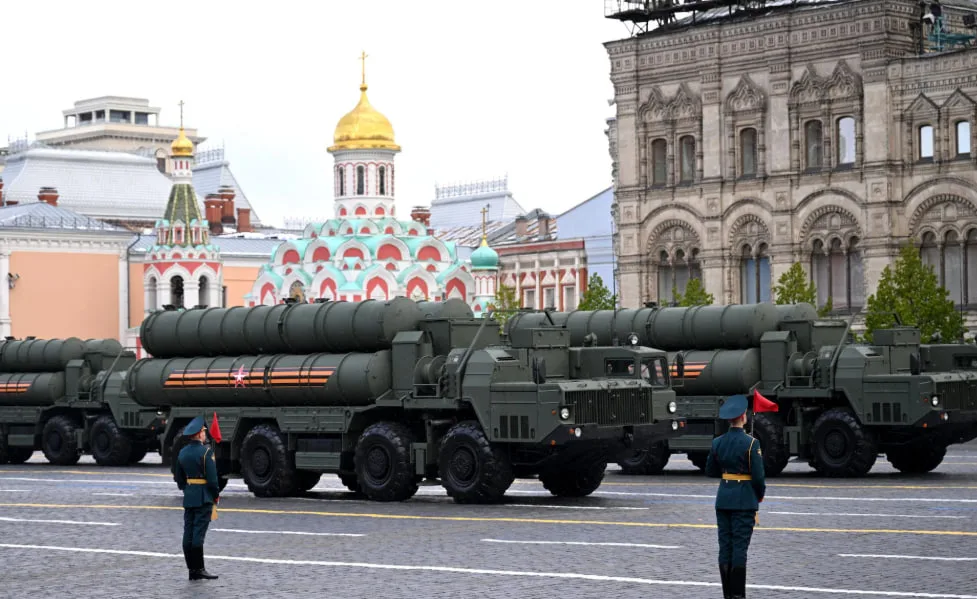
Iran and Russia are in the final stages of negotiations on a major deal to supply Tehran with advanced Russian S-400 Triumf surface-to-air missile systems and precision-guided missile systems. Source: The Telegraph
Iran’s new Supreme Leader, Mojtaba Khamenei, sent his security chief, Mohsen Rezaei, to the Kremlin with a personal letter for Vladimir Putin. The document’s main demand was the urgent delivery of long-range air defense systems. Following talks in Moscow, Rezaei said that significant agreements had been reached on regional security in the postwar period, as well as on a project to build a new joint gas pipeline. These talks directly contradict public statements by US President Donald Trump, who claimed that Russia was not providing military assistance to the Islamic Republic.
The urgent request for S-400 systems has become a key element of Tehran’s revised defense strategy. During the previous massive strikes by the United States and Israel, Iran’s existing air defense system was effectively destroyed. This left the country’s critical infrastructure, key nuclear facilities, and senior leadership exposed to attacks, including the killing of Supreme Leader Ali Khamenei. The arrival of Russian S-400 systems is intended to restore Iran’s air shield and protect its strategic centers.
Meanwhile, confidential documents from Russia’s defense industry concerning an export project codenamed “K-10” have surfaced online. They record commitments by Russian state-owned factories to manufacture and supply Iran with twin launchers for LMUR (Product 305) helicopter-launched precision-guided missiles, with deliveries scheduled to be completed in 2025.
The talks in Moscow are based on a secret memorandum drawn up by a special committee of the Iranian parliament to plan for the conditions of a large-scale war. In the document, Iranian strategists outlined a set of measures to ensure the regime’s survival under intense external pressure. The plan includes building a “resistance economy,” developing domestic systems (such as the Bavar-373 air defense system and Shahed-136 drones), and forging strong military alliances with powers that do not submit to the United States, primarily Russia and China. The memorandum also emphasizes the importance of controlling key maritime routes—the Strait of Hormuz, the Bab el-Mandeb Strait, and the Suez Canal. Around a third of the world’s oil trade passes through these chokepoints, and Tehran hopes to use this leverage to exert direct pressure on the global economy and the West’s energy security.
Despite the Iranian side’s optimism, international military analysts and regional officials note that the Kremlin faces a serious dilemma in fulfilling this request. For many years, Russia postponed the delivery of S-400 systems to avoid damaging relations with Israel and the Arab states of the Middle East. Today, however, the main obstacle is Russia’s own equipment shortage: its air defense system is under enormous strain due to ongoing Ukrainian drone and long-range missile strikes on oil refineries, military air bases, and logistics hubs. As a result, the Russian military has virtually no S-400 batteries available for transfer to other countries, despite Tehran’s persistent demands.
It was previously reported that Russia is sharing with Iran the latest weapons tested in the war in Ukraine.
Источник: GuildHall
 Поделиться