


Russia and Belarus expand the “gray zone” of hybrid operations from Norway to Romania
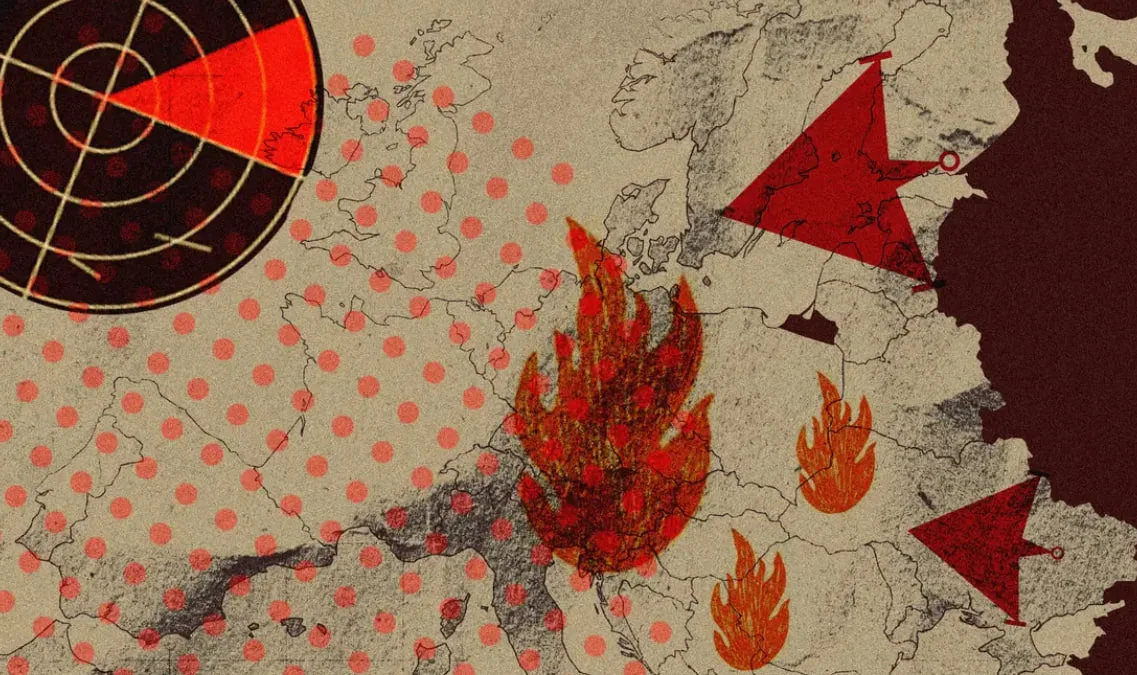
At least 52 incidents linked to physical hybrid aggression by Russia and its supporter Belarus took place in the European Union, the United Kingdom, Norway and Moldova between April 1 and October 15, 2026, according to a joint investigation by «Вот Так» and European media outlets, conducted under the auspices of the European Broadcasting Union’s (EBU) Eurovision News Spotlight analysis project. Source: Вот Так
Researchers focused on physical incidents, including sabotage, espionage, airspace violations and attacks on infrastructure, which officials and intelligence agencies linked to operations by Moscow and Minsk.
Poland was the main arena of the hybrid war, with at least nine incidents recorded on its territory—nearly a fifth of the total. During the reporting period, a Russian Kh-101 cruise missile crashed on Polish territory, and a Mi-8 military helicopter intruded into its airspace. Attempts to set fire to and sabotage defense industry companies producing drones—including sites belonging to WB Electronics and Flytronic—were thwarted. A Starlink ground station was also damaged in an arson attack. In addition, Russian émigré artist Semyon Skrepetsky was murdered in Poland; Polish authorities believe Russian intelligence services may have been involved.
At the same time, Belarus continues to employ hybrid pressure tactics, including organizing illegal migrants’ attempts to breach state borders through the Suwałki Gap (Polish border guards recorded more than 250 such attempts and detained about 900 people in the border area), gathering information on the Belarusian opposition in Warsaw, and launching weather balloons that temporarily disrupted operations at Vilnius Airport.
Hybrid operations also extended to 16 other countries, including Romania and Bulgaria, where drone crashes and attacks by naval drones on vessels near NATO ports on the Black Sea were recorded, as well as Germany, where saboteurs tried to attack Leipzig Airport and the Bundeswehr air base in Wunstorf using drones. In Norway, GPS jamming and maneuvers by Russian vessels near undersea cables were reported; in Finland, military aircraft violated airspace; and in Moldova, drones crashed and exploded.
Teija Tiilikainen, Director of the European Centre of Excellence for Countering Hybrid Threats, stressed that the rising number and variety of such attacks are expanding the “gray zone” and blurring the line between peace and war, as Moscow uses this tool to weaken Western support for Ukraine and test the limits of Western tolerance.
Recall that the EU extended sanctions against Russia over hybrid attacks.
Источник: GuildHall
 Поделиться