
Solar Battery Storage System Cost in 2026: What Changes the Quote?
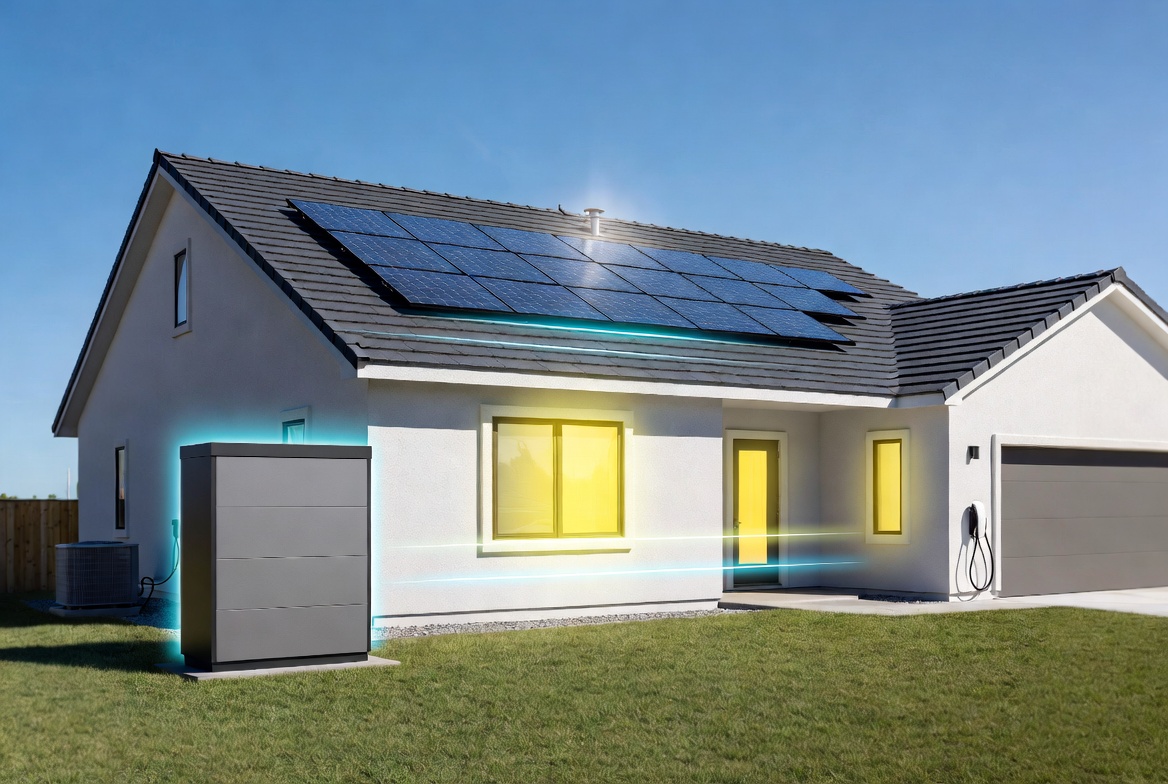
Battery prices get attention, but the installed quote tells the real story. A solar battery project includes more than cells in a cabinet. It may involve inverters, backup switching, wiring, permits, monitoring, load controls, and sometimes electrical panel work.
Capacity is only the first line item
Battery capacity is measured in kilowatt-hours, and more capacity usually costs more. EnergySage reports an average battery cost of ,128 per kWh of stored energy in its 2026 home battery guide, while installed quotes vary by market and scope. That figure is useful as a benchmark, not a universal price. A smaller system for essential backup can cost far less than a whole-home design with large power output.
Backup scope changes the budget
Solar self-consumption is one use case. Whole-home backup is another. A battery that only stores extra solar for evening use may need less switching and load-control equipment than a battery expected to keep HVAC, pumps, cooking loads, and outlets running through an outage. NREL residential solar-plus-storage cost work consistently separates hardware from soft costs such as labor, permitting, and overhead because those pieces affect the installed total.
Integrated systems can simplify planning
Homeowners comparing residential solar battery storage should ask what is included: battery modules, inverter function, energy management, backup hardware, app monitoring, commissioning, and utility paperwork. An integrated platform can reduce the number of separate components, although the actual installed cost still depends on the site. The cleanest quote explains both equipment and labor in plain language.
Incentives need current verification
Federal, state, and utility incentives can improve the economics, but the rules change. Some programs require solar pairing, some focus on demand response, and some have capacity or income limits. Homeowners should ask installers to separate gross cost, incentive assumptions, and net cost. Tax questions should be checked with a qualified professional, especially when storage, solar, and EV charging are bundled.
Compare value, not just price
The least expensive quote is not always the best value if it cannot support the loads the household cares about. A useful proposal should show what happens on a sunny day, during evening peak rates, and during a grid outage. Homeowners can use SigenStor integrated storage as a reference point while asking how integrated solar, storage, and control features affect long-term usefulness.
A useful way to judge this topic is to ask what would happen on three different days: a bright weekday with normal solar production, a cloudy evening with high household use, and a grid outage that starts after sunset. Those scenarios expose weaknesses that a simple capacity number can hide. They also help the homeowner decide whether the system is mainly for bill control, backup confidence, solar self-consumption, or future electrification.
The installer should be able to explain the operating mode in plain English. When does the battery charge from solar? When does it discharge? How much reserve is protected for outages? What happens if an EV charger, heat pump, or large appliance starts at the same time? These details are practical, not academic, because they determine whether the system feels calm during real use.
It is also worth asking for assumptions in writing. Solar production estimates, rate schedules, backed-up loads, usable battery capacity, and incentive assumptions should be visible in the proposal. According to NREL, installed solar-plus-storage costs depend on configuration and site conditions, so a transparent proposal is often more valuable than a single headline price.
Homeowners should not overlook the monitoring experience. A battery app should show enough information to build trust without turning daily life into a technical chore. Clear views of solar production, home consumption, grid imports, battery state of charge, and backup reserve make it easier to adjust settings as seasons, rates, and household loads change.
The proposal should also explain what happens when conditions are not ideal. A cloudy week, a summer heat wave, a winter storm, or a sudden change in utility pricing can all affect performance. A strong design does not pretend those cases never happen; it shows how the system prioritizes essential loads, preserves reserve, and uses solar production when it is available.
Finally, the homeowner should compare the battery decision with other energy upgrades. Better insulation, a more efficient heat pump, smarter EV charging, or a revised utility plan may change the required battery size. Storage works best when it is part of a whole-home energy plan rather than a standalone purchase made from a spec sheet.
That practical mindset also helps avoid overbuying. The right system should be large enough to solve the defined problem, clear enough to manage, and flexible enough to remain useful as the home changes.
The best solar battery storage system is not the one with the loudest claim. It is the one that matches the home’s solar production, daily loads, outage expectations, and future electrical plans.