


The “Doppelganger” network is trying to turn Russian disinformation into EU policy decisions
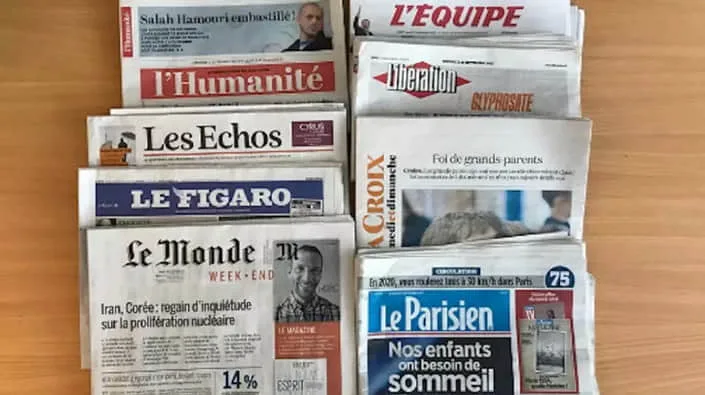
The Russian disinformation network “Doppelgänger” has shifted from targeted propaganda campaigns to building a comprehensive hybrid infrastructure, capable of turning disinformation and manipulation into domestic policy decisions in European Union states, analysts at the Robert Lansing Institute said. Source: RLI
The Kremlin views the EU’s information space as a full-fledged theater of war, where the main goal is not simply to discredit Ukraine or spread anti-Western narratives, but to systematically undermine European institutions’ ability to make coordinated decisions on security, sanctions, and military aid.
Confirmed information about Doppelgänger’s structure points to a tightly centralized chain of command, coordinated at the state level in Russia. Strategic objectives are set by the Russian Presidential Administration and entities linked to the Russian Ministry of Foreign Affairs, while implementation is delegated to specialized organizations. The RLI report clearly distinguishes the roles of the project’s key overseers. First Deputy Chief of Staff of the Russian Presidential Administration Sergey Kiriyenko and Aleksandr Kharichev provide overall political leadership and set strategic objectives. Sofya Zakharova directly coordinates the so-called “European Counter-Campaign,” which targets the United States, NATO, Ukraine, and the EU’s sanctions policy. Ilya Gambashidze and his commercial entities—the Agency for Social Design (ASD) and the Autonomous Non-Profit Organization “Dialogue”—are responsible for the technical side: producing clones of well-known European media outlets, generating fake stories, distributing content, and assessing the effectiveness of its dissemination.
The main risk to Europe’s security is that Doppelgänger uses a multi-stage process to legitimize lies. First, ASD and “Dialogue” create fake copies of reputable media outlets such as Spiegel, Le Monde, or ANSA and fabricate high-profile stories, such as false claims about Ukrainian officials buying luxury yachts or confiscated European villas being handed over to Ukrainian citizens. These materials are then disguised as genuine public debates about inflation, rising energy prices, migration, and defense spending through a network of bots and anonymous outlets. European politicians subsequently pick up the false stories, which make their way into parliamentary inquiries, opposition speeches, and reports in traditional media. At this stage, even without direct contact with Moscow, disinformation becomes a legitimate argument in domestic political battles. The end result of this chain is a slowdown in weapons deliveries to Kyiv, an increased political cost for incumbent governments of supporting Ukraine, and the formation of “blocking minorities” in EU sanctions votes.
The strategy for promoting these narratives is adapted to the specific circumstances of individual European countries. In Germany, a key target because of its economic weight and role in NATO, the Kremlin’s campaign focuses on the Alternative for Germany (AfD) party, as well as certain segments of the far right and far left. Propaganda actively exploits AfD’s public statements against sanctions and arms deliveries, exacerbating divisions between the eastern and western federal states and discrediting NATO as a security guarantor. In Italy, the network operates differently—through the media landscape, civic initiatives, and radical movements, including groups linked to Roberto Vannacci and members of the League party. The main focus there is on manipulating social fears and persuading people that financial aid to Ukraine directly undermines their personal well-being.
RLI analysts emphasize that targeted EU measures, including adding ASD and “Structura” to sanctions lists in 2023 and blocking individual websites, have proved ineffective. The network adapts easily, constantly changing domains and using technical means to conceal its activity. The core problem lies in a systemic asymmetry: the Kremlin acts from a single center, while the EU response is fragmented by bureaucratic coordination among 27 member states. To protect European democracy, the Lansing Institute recommends shifting from blocking fake stories to dismantling the influence infrastructure in its entirety. This includes conducting rigorous audits and eliminating opaque schemes for financing European political parties and media projects through intermediaries; systematically sharing data among EU member states’ counterintelligence agencies to identify links between specific politicians and Russian intelligence; and prosecuting those who knowingly participate in covert operations on behalf of a foreign state.
RLI’s main conclusion is that Europe will be unable to secure its strategic autonomy until it deprives the Kremlin of the ability to influence European decision-making from within.
As a reminder, The Kremlin promotes propaganda through “Russian Houses” in the United States and Europe.
Джерело: GuildHall
 Поділитися